As video analytics requirements for a project grows, from a handful of cameras to hundreds or even thousands across multiple locations, system architecture of the video analytics product becomes just as important as the system reliability and accuracy.
intuVision VA’s distributed processing capability, failover/redundancy support and Lightweight Directory Access Protocol (LDAP) integration for managed environments allows organizations to scale up their video analytics processing without sacrificing performance, reliability, or ease of management.
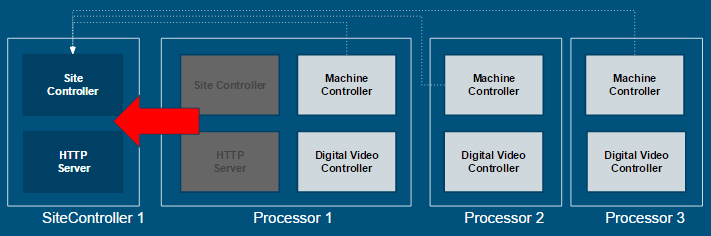
In a distributed deployment, video analytics processing can run across multiple servers while being administered from a central location as a single unified system. From the user’s perspective, the camera configuration, rule setup, event review, reporting, is managed through the same intuVision Admin and intuVision Review interfaces. Cameras can also be reassigned between processing servers as needed without disruption, making it easy to rebalance workloads as systems expand or change over time.
intuVision VA architecture provides a practical path to scaling analytics without requiring increasingly expensive hardware. intuVision VA processing can be distributed across multiple low-cost machines as systems grow without the need for a high capacity ( and expensive!) server. In many cases, this approach significantly reduces infrastructure costs while still delivering the performance required for large camera systems.
Distributed on-prem processing can also dramatically reduce network load; by placing processing servers locally at each site, video streams can be analyzed close to the cameras themselves. Only the resulting metadata and events need to be transmitted to a remote central control site. intuVision VA’s event detections across all locations gets aggregated and managed cameras at the central control site, giving operators a unified view of all locations without requiring constant high-bandwidth video streaming.
Reliability and system health metrics are other key advantages of intuVision VA’s up-time with minimal service interruption. Distributed architecture make it possible to implement automatic failover redundancy. A standby processing server can be kept on deck, while the health of the system is continuously monitored; when an issue is detected, video processing is automatically transferred to the backup server. This level of resilience is particularly valuable for mission-critical deployments where analytics must remain operational at all times.
intuVision VA’s distributed processing has been providing the scalability, efficiency, and reliability needed to expand systems confidently by commercial or government organizations managing large-scale video analytics deployments, such as smart cities, utilities infrastructure protection, hospital campuses, retail chains. By combining centralized management with flexible processing architecture, hybrid intuVision Edge and intuVision VA server-side analytics deployments, we support enterprises to expand their analytics capabilities with high system performance and lowest cost.

© Copyright 2006-2026 intuVision, Inc. All Rights Reserved. intuVision is registered in the U.S. Patent and Trademark Office.